



Why ROI in AI-Driven CX Is a Strategic Imperative
Artificial Intelligence has transformed customer experience (CX) from basic automation to sophisticated systems that predict customer needs, personalize interactions, and resolve issues proactively. In 2026, with agentic AI and multi-agent systems becoming mainstream, businesses must measure ROI to justify investments and optimize strategies.
ROI in CX goes beyond cost savings, it's about creating lasting customer loyalty and driving revenue growth. Traditional metrics like cost per ticket are insufficient; a holistic approach is needed to capture AI's full impact, backed by real-world data from Gartner and McKinsey showing average returns of $3.70 for every $1 invested in AI, with leaders achieving higher multiples.
The Limitations of Traditional ROI Models
Traditional ROI models focus solely on immediate financial gains, such as reduced labour costs. However, in AI-driven CX, these models overlook key benefits like improved customer retention and operational scalability.
Key shortcomings include:
1. Ignoring long-term revenue from higher customer satisfaction and loyalty.
2. Undervaluing productivity boosts, where AI can increase agent efficiency by 30-45%.
3. Failing to account for compounding effects, like a 5% retention increase leading to 25-95% profit growth.
4. Treating AI as a cost centre rather than a strategic asset that enhances brand trust.
To address this, businesses need a multi-dimensional ROI framework that balances financial, operational, and experiential value.
A Modern ROI Framework for AI in CX
A balanced ROI model weights three core dimensions to reflect AI's comprehensive impact in CX:
1. Financial Impact (40%): Direct revenue growth and cost reductions.
2. Operational Impact (30%): Efficiency gains and scalability.
3. Customer Experience Value (30%): Satisfaction, loyalty, and lifetime value improvements.

This framework ensures investments are evaluated for both short-term savings and long-term strategic value, aligning with 2026 trends where mature adopters achieve average $3.70 ROI per $1 invested.
Financial ROI: Measuring Direct Economic Impact
AI delivers clear financial returns by automating routine tasks and enabling upselling. For example, AI chatbots and agents can reduce service costs by 25-40% while boosting conversions by up to 30%.
Key financial levers:
1. Cost savings: Deflect 40-80% of queries from human agents, projecting $80 billion in global contact centre labour savings by 2026 (Gartner).
2. Revenue uplift: Personalized recommendations increase customer lifetime value by 15-30%.
Example calculation: If Pre-AI cost per interaction is $6.00 and AI deflects 40% at $0.50 per interaction, savings yield 300-420% ROI within 12-24 months.
Organizations report average returns of 3-8x within 12-24 months, turning CX into a revenue driver.
Operational ROI: Productivity at Scale
AI streamlines operations, reducing handle times and empowering agents. In 2026, agentic AI will resolve issues autonomously, boosting productivity by 35-45%.
Core operational metrics:
1. Average Handle Time (AHT) reduction: Up to 50% with AI assistance.
2. First-contact resolution: Improves by 14% per hour (McKinsey).
3. Self-service rates: Reach 70%+, containing issues before they escalate.

As maturity grows, efficiency compounds, with top firms resolving tickets far faster than others.
Customer Experience ROI: Quantifying Intangible Value
AI enhances CX through personalization and proactive support, leading to measurable loyalty gains. A 10–20-point CSAT/NPS increase can reduce churn by 20%.
Essential CX indicators:
1. Net Promoter Score (NPS): Rises 10-15 points with predictive AI.
2. Customer Satisfaction (CSAT): Improves by 10-25 points.
3. Retention: 5% boost yields 25-95% profit increase.
Example: AI personalization increases repeat engagement by 15%, adding millions in lifetime value.
73% of shoppers believe AI positively impacts CX, driving trust and advocacy.
Attribution Modelling: Proving AI's Incremental Impact
Attribution isolates AI's contribution from other factors using data-driven methods.
Proven approaches:
1. A/B testing: Compare AI-enabled vs. baseline journeys for uplift in resolution rates.
2. Pre/post benchmarking: Measure metrics like AHT before and after AI deployment.
3. Control groups: Track outcomes in AI vs. non-AI segments.

These methods provide evidence, showing AI's 30-45% productivity lift in customer care.
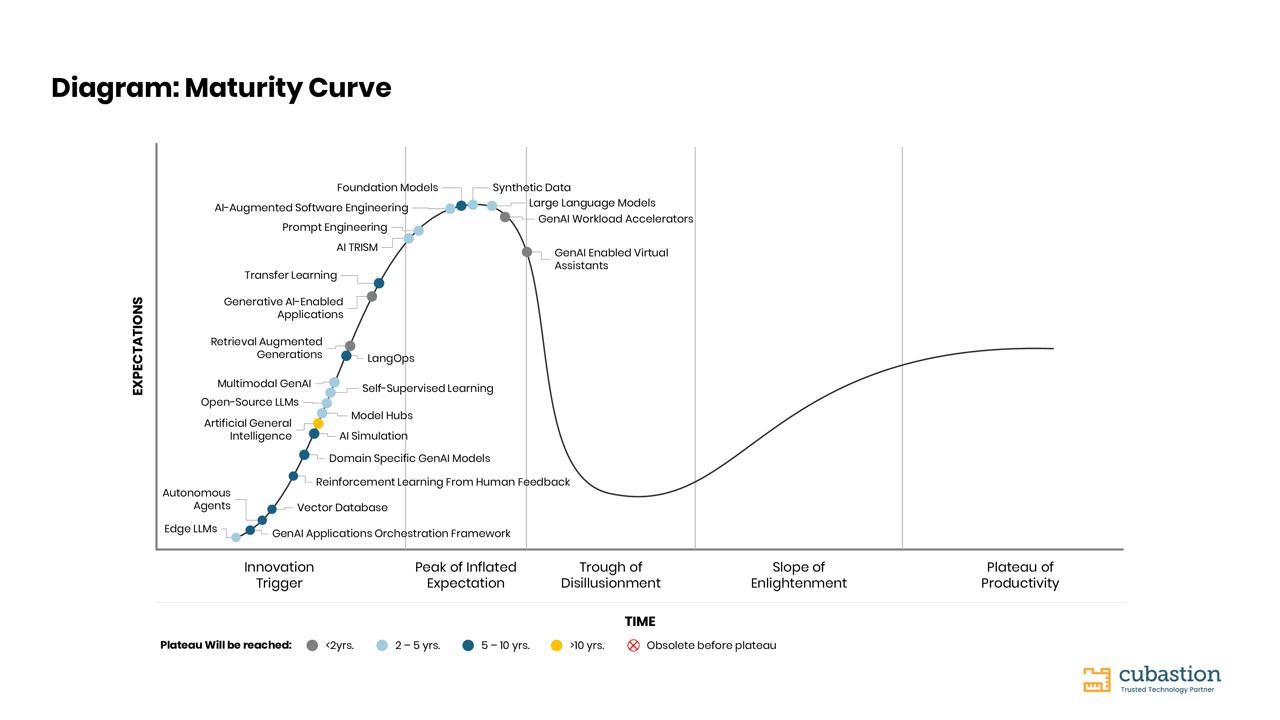
The AI CX Maturity Curve
ROI accelerates as organizations advance in AI maturity.
1. Foundational (2023-2024): Basic chatbots; ROI limited by setup costs.
2. Expansion (2025): Generative AI; efficiency rises with 90% adoption.
3. Intelligent (2026): Predictive CX; strong ROI from reduced churn.
4. Agentic (Beyond): Autonomous systems; optimal value extraction.

By 2026, mature adopters will achieve higher ROI, far outpacing early stages.
Governance, Ethics, and Sustainable ROI
Ethical AI ensures long-term success by building trust and compliance.
Critical elements:
1. Transparency: Explain AI decisions to customers.
2. Bias mitigation: Regular audits to prevent unfair outcomes.
3. Human oversight: Keep agents in the loop for complex cases.
4. Regulatory alignment: Adhere to standards like the EU AI Act.
Companies with strong governance see higher adoption and sustained ROI, with 98% of high-maturity firms planning AI controls.
Conclusion: From Measurement to Mastery
In 2026, measuring AI ROI in CX is essential for competitive advantage. By adopting a weighted framework, using attribution tools, and progressing along the maturity curve, businesses can unlock AI's full potential.
AI enables intelligent relationships, proactive service, and scalable empathy, transforming CX from a cost to a growth engine.