



Introduction to Data Integration
If you have ever worked with data in any capacity, you would know that it rarely exists in a clean and ready-to-use format. Most organizations deal with data that is spread across multiple systems, stored in different formats, and updated at different intervals. Before this data can support reporting, analytics, or decision-making, it needs to be consolidated, cleaned, and transformed into a consistent structure. This entire process is what we call data integration, and it plays a critical role in ensuring that businesses can rely on accurate and timely insights rather than fragmented information.
On-Premise vs Cloud: Setting the Context

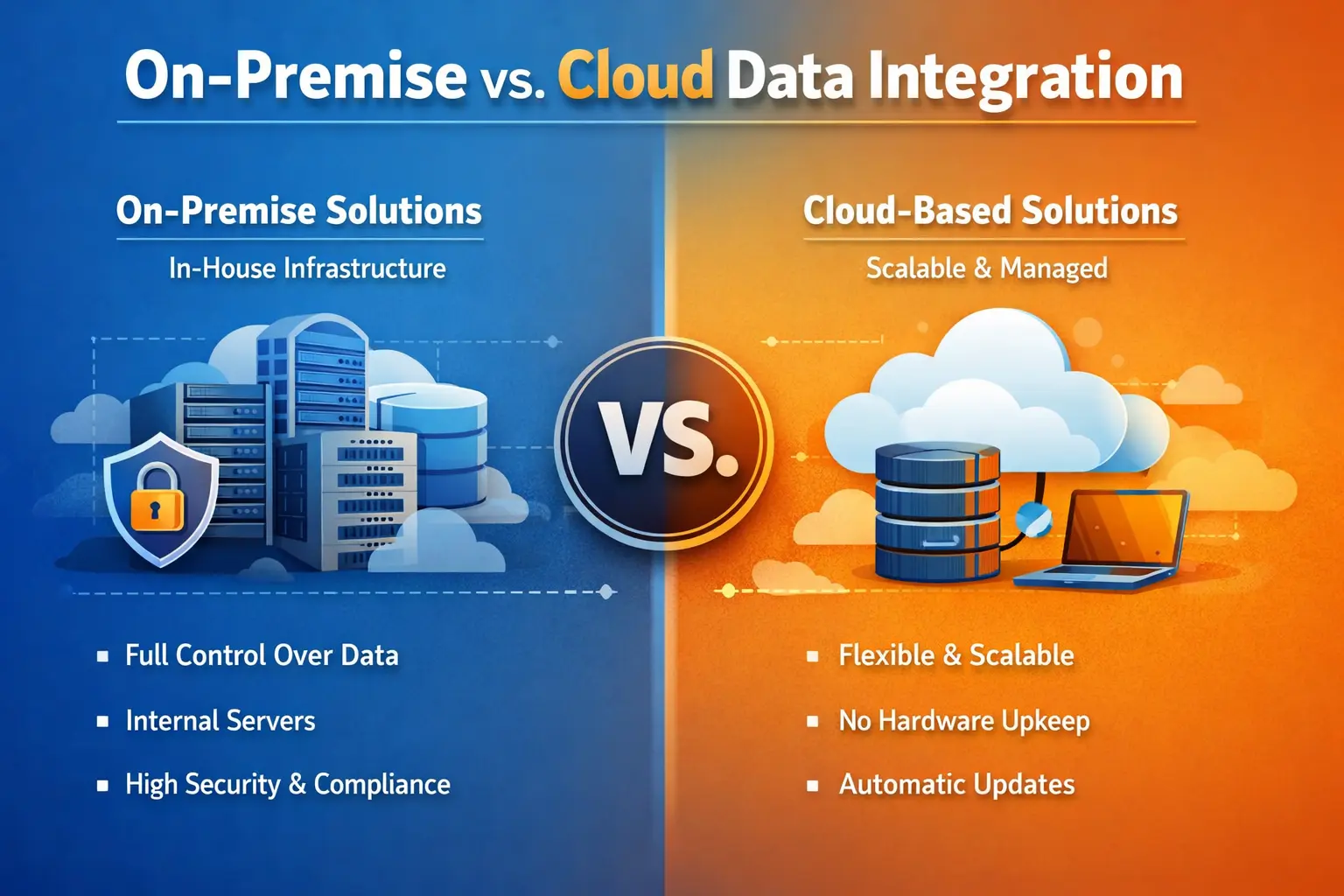
To better understand data integration tools, it is important to first look at the environments they operate in. On-premise tools are deployed within an organization’s internal infrastructure, offering greater control over data and systems, which is often important for regulatory or legacy reasons. On the other hand, cloud-based tools are designed for flexibility and scalability, allowing organizations to handle growing data volumes without worrying about infrastructure management. This distinction becomes essential when evaluating which tool fits best within a company’s broader technology landscape.
Oracle Data Integrator: Leveraging Database Power
Oracle Data Integrator is widely used in organizations that rely heavily on Oracle databases, and its design reflects this focus. Unlike traditional ETL tools that transform data before loading it into a target system, ODI follows an ELT approach where data is first loaded and then transformed directly within the database. This allows organizations to utilize the processing power of their database systems, reducing data movement and improving performance. As a result, ODI becomes particularly effective in large-scale environments where efficiency and speed are critical, especially when dealing with high volumes of structured data.
Talend: Flexibility with Broad Connectivity
Talend offers a more flexible and cost-effective approach to data integration, making it a popular choice among organizations that operate across diverse data environments. With its strong open-source foundation, Talend provides a wide range of connectors that enable seamless integration with databases, applications, APIs, and flat files. This adaptability allows teams to design integration workflows that suit their specific needs without being restricted by vendor limitations. At the same time, Talend scales well for enterprise use, making it suitable not only for growing organizations but also for those looking to build customizable and future-ready data pipelines.
Informatica Intelligent Cloud Services: Simplifying Cloud Data Integration
As organizations continue to move toward cloud ecosystems, the need for managed services that reduce operational overhead has become more important. Informatica Intelligent Cloud Services addresses this need by offering a fully managed platform where users can build and manage data pipelines without worrying about infrastructure. The platform combines ease of use with powerful integration capabilities, enabling both technical and non-technical users to work with data more efficiently. Its ability to scale seamlessly makes it an attractive option for organizations that want to accelerate their data initiatives without investing heavily in backend management.
Databricks: A Unified Data and Analytics Platform
Databricks goes beyond traditional data integration by providing a unified platform that supports data engineering, analytics, and machine learning within a single environment. Built on technologies like Apache Spark and Delta Lake, it is designed to handle massive datasets and real-time processing requirements. What makes Databricks particularly powerful is its ability to bring together multiple data workflows, allowing organizations to move from data ingestion to advanced analytics without switching tools. This unified approach not only improves efficiency but also enables teams to derive deeper insights from their data, especially in complex and data-intensive scenarios.
Conclusion: Building the Foundation for Data-Driven Decisions
Understanding these tools is the first step toward building a strong data integration strategy. Each tool serves a specific purpose, whether it is optimizing performance in on-premise environments or enabling scalability in the cloud. The right choice depends on factors such as existing infrastructure, data volume, and long-term business goals. While this blog focused on simplifying the definitions and core capabilities of these tools, the next step is to explore how they are implemented in real-world scenarios, where architecture decisions and practical considerations truly shape the success of any data initiative.
Want to know more about implementation? Check out the next blog: “Implementing Data Integration Tools in Real-World Scenarios”