


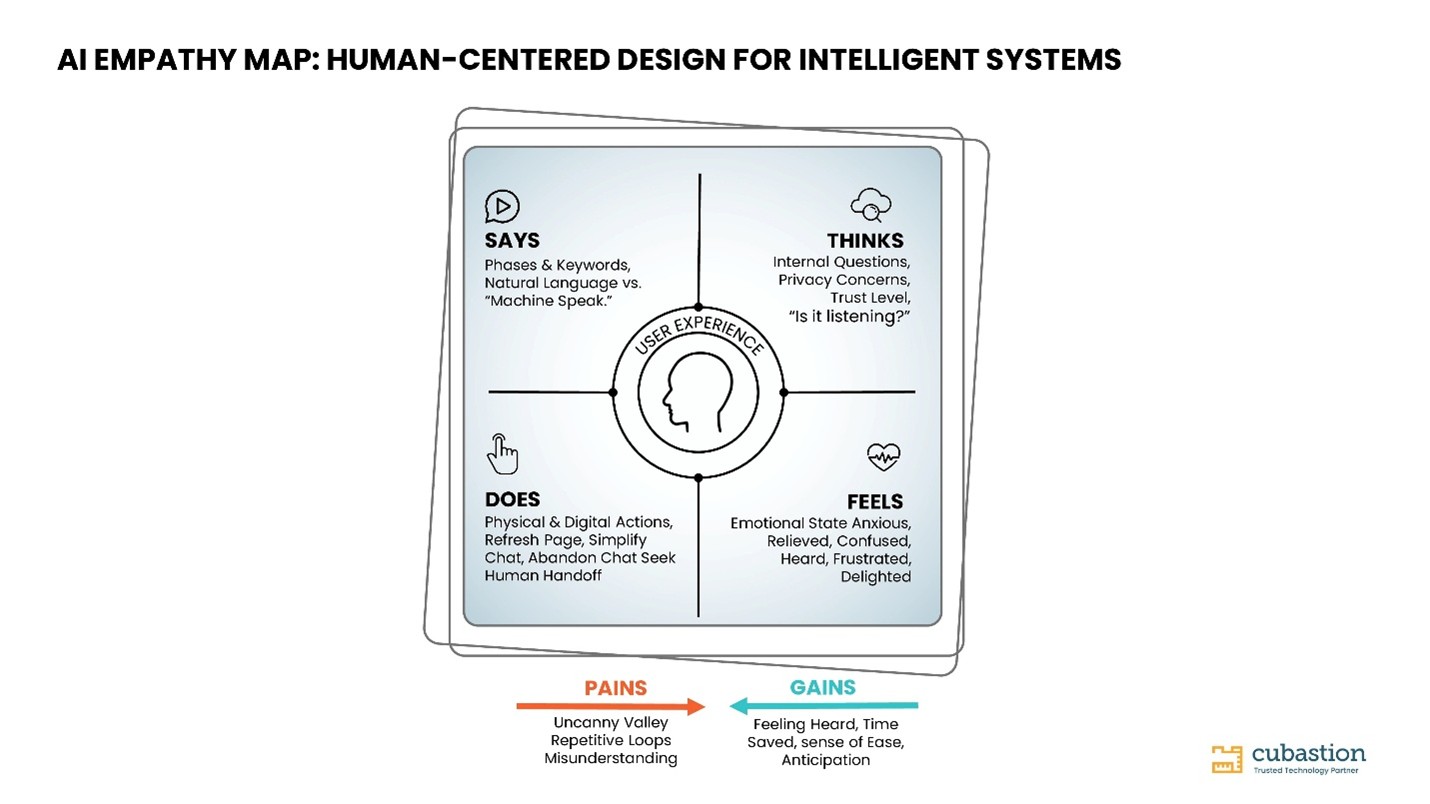

The Customer Was Answered, But Not Heard
The customer explained the issue carefully. It wasn’t rushed. It wasn’t emotional. Just a clear description of what had gone wrong and why it mattered. Within seconds, a response arrived, polite, accurate, and technically correct. The system had done exactly what it was designed to do.
And yet, something felt missing.
The response solved the problem on paper, but it didn’t acknowledge the frustration behind the question. It didn’t reflect the context of the situation or the effort it took for the customer to explain it. The customer paused, reread the message, and wondered whether anyone had truly understood what they were trying to say.
This moment is increasingly common. Customers aren’t being ignored; they’re being answered. But in the process, they’re often left feeling unheard. The gap isn’t about speed or capability. It’s about empathy, and how easily it gets lost when systems are built to respond instead of truly listen.

The Modern CX Paradox
Customer experience has never been faster. Responses are instant, channels are always open, and support is available around the clock. From a distance, it looks like progress. Yet many customers walk away from these interactions feeling more frustrated than reassured.
This is the paradox of modern CX. Speed has improved, but understanding has not kept pace. Customers receive answers quickly, but those answers often feel generic or disconnected from their actual situation. The interaction moves forward, yet the concern behind it remains unresolved.
As automation increased, conversations became optimized for closure rather than comprehension. Systems learned how to respond efficiently, but not how to pause and interpret what the customer truly needed. The result is an experience that appears successful on dashboards but feels incomplete to the people on the other side of the conversation.
When Understanding Became a Data Problem
As customer experience scaled, understanding slowly shifted from a human judgment to a data exercise. Conversations were broken down into categories, intents, and outcomes. What mattered most was whether a request could be identified and routed correctly, not whether the customer felt acknowledged.
This approach brought structure and efficiency, but it also narrowed how understanding was defined. A concern became a ticket. A conversation became a flow. Emotional context, hesitation, and nuance were difficult to capture once interactions were reduced to predefined paths.
Customers, however, did not change their expectations. They still wanted reassurance, recognition, and clarity. When systems focused only on what could be measured, they often missed what customers actually meant. Understanding became something systems attempted to calculate, rather than something experiences were designed to convey.
Why AI Often Misses Empathy
AI systems are exceptionally good at recognizing patterns. They can match questions to known scenarios, retrieve accurate information, and deliver responses at scale. What they struggle with is ambiguity. Empathy lives in the space between what is said and what is felt, and that space is rarely structured or predictable.
A customer may sound calm but feel frustrated. Another may ask a simple question that carries anxiety beneath it. These emotional layers are not always visible in words alone. When systems focus only on accuracy and speed, they risk responding correctly while missing the emotional weight of the situation.
This is not a failure of technology. It is a limitation of design. Empathy requires interpretation, context, and restraint. Without those qualities built into the experience, even the most capable systems can leave customers feeling misunderstood.
The Difference Between Listening and Waiting to Reply
Many customer experience systems are designed to respond as soon as input is received. They process the message, match it to a known path, and deliver an answer. Technically, this looks like listening. In practice, it often feels like waiting to reply.
True listening requires more than detecting intent. It involves pausing to understand why the customer reached out, what prompted the message at this moment, and how the situation fits into a broader context. Without that pause, responses can feel rushed or misaligned, even when they are accurate.
Customers sense this difference immediately. When they feel listened to, the conversation flows. When they feel processed, frustration builds. The gap between listening and replying is subtle, but it is where empathy either emerges or disappears.
How Customers Experience the Empathy Gap
From the customer’s perspective, the empathy gap rarely feels dramatic. It shows up quietly. They notice it when they have to repeat the same explanation across channels. When a response solves the issue but ignores the frustration that led to it, it will be a problem. When the conversation ends, something still feels unresolved.
In an ideal system, this gap is intentionally reduced. The system recognizes when a customer has reached out multiple times or when a message follows a delay or disruption. Instead of responding with a standard resolution, it adjusts its tone and acknowledges the experience so far. The customer does not feel like they are starting over.
When this sensitivity is missing, customers begin to disengage. They may comply, but trust weakens. Empathy is not about emotional language alone. It is about making customers feel that their experience, not just their request, has been understood.
The Cost of Customers Not Feeling Heard
When customers do not feel heard, the impact goes far beyond a single interaction. The immediate issue may be resolved, but confidence quietly erodes. Customers return more often, escalate sooner, and approach future interactions with skepticism rather than trust.
In an ideal system, this pattern is detected early. Repeated contact, unresolved tone, or abrupt conversation endings signal that something is missing. The system responds by slowing the interaction, offering clarity, or guiding the conversation differently. The goal is not faster closure, but restored confidence.
When this does not happen, the cost accumulates. Loyalty weakens, satisfaction scores flatten, and customers disengage emotionally. They may stay, but they stop believing that the experience is designed for them.
This Is Not an AI Failure, It Is a Design Choice
It is easy to believe that empathy gaps exist because AI is not advanced enough. Most of these gaps come from how customer experience systems are designed. Many systems are built to prioritize speed, volume, and quick closures, leaving little room for understanding the customer’s emotions or intent.
In an ideal setup, empathy is not an extra feature. It is built into experience. The system knows when efficiency is important and when the customer simply needs to feel heard. It allows space for acknowledgment before jumping to solutions and focuses on clarity instead of rushing to an outcome.

When empathy is missing, it is rarely due to AI limitations. It is usually the result of design decisions that favor metrics over human understanding. When systems are designed to listen first, empathy naturally becomes part of the customer experience rather than an afterthought.
What a Better Listening System Looks Like in Practice
Imagine a customer reaching out to support after a delayed delivery. Instead of starting with rigid authentication steps and scripted responses, the system first acknowledges the emotion behind the message. It recognizes frustration in the customer’s tone and adapts its response accordingly. The language is calm, respectful, and reassuring. Only then does it move into problem resolution.
In an ideal setup, AI handles the background work. It pulls order details, checks delivery logs, and identifies possible issues instantly. At the same time, it flags emotional signals like repeated complaints, rising frustration, or confusion. When the situation crosses a certain threshold, the system smoothly hands over to a human agent, already briefed with full context.
The human agent does not start from zero. They see the customer’s journey, past interactions, and emotional cues at a glance. This allows them to focus on empathy and judgment rather than data collection.


This kind of system does not try to replace empathy with automation. It supports empathy by removing friction. It listens first, understands context, and knows when a human voice matters most. That is the difference between a system that responds and one that truly listens.
Why Being Heard Is the New Foundation of Customer Experience
Customers are not asking for perfect answers. They are asking to feel understood.
The gap in modern customer experience is not a lack of technology or data. It is the absence of emotional awareness in how systems respond. When AI systems prioritize speed, scripts, and efficiency over listening, customers walk away feeling invisible, even when their issues are technically resolved.
This is why empathy has become the defining factor of trust. Trust is built when systems recognize emotion, respect context, and respond like a conversation rather than a transaction. AI has a powerful role to play here, but only when it is designed to support understanding instead of replacing it.
The future of customer experience does not belong to systems that talk faster. It belongs to systems that listen better, escalate wisely, and create space for humans to lead when empathy is required.
In the next part of this series, we will explore how customer experience can be redesigned around empathy, and where AI should step back so humans can step forward.
Top of Form
Bottom of Form
Top of Form
Bottom of Form